
What Keeps Mine Trucks Connected Beyond Private 5G?
2026.08.19 / By Sailsky / Tags:Autonomous HaulageIndustrial Wi-Fi 6Mining Wireless NetworkPrivate 5GSmart Mining
Additional Coverage Requirements Along the Mine Truck Route
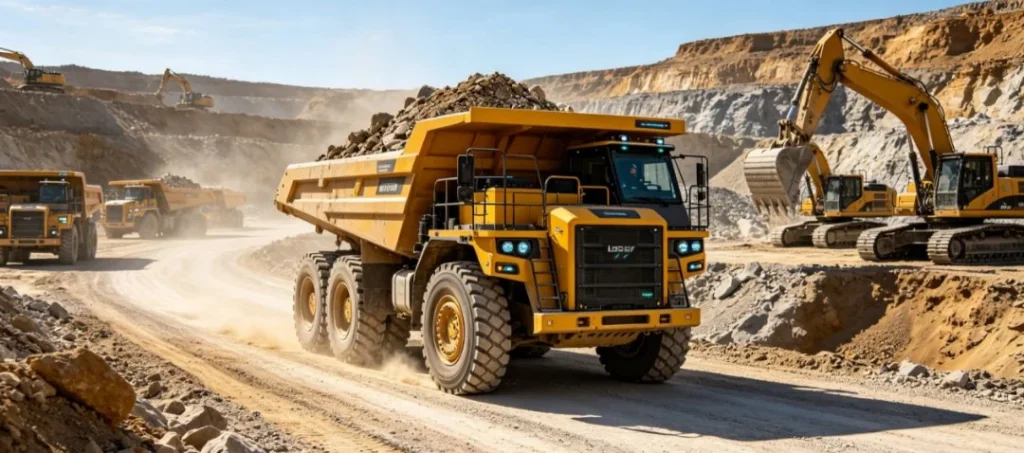
A mine truck wireless network must keep vehicle-control data and HD video available across a changing haul route. Sailsky recently worked with a partner to complete an industrial wireless communication test for autonomous driving in an open-pit mine. The existing private 5G network had local coverage gaps and weaker signal quality at coverage edges. Therefore, the project combined private 5G with industrial Wi-Fi 6. This dual-link design provided an additional connection for the vehicles, and the required service tests were completed successfully.
Loading areas, dumping areas and other production zones can have uneven terrain, curved roads and elevation changes. These conditions can weaken private 5G coverage at route edges. For wider safety context, NIOSH highlights the need for reliable mine communication networks. Continuous wireless service is especially important as mines adopt higher levels of haul truck automation.
Autonomous haul trucks require millisecond-level response for vehicle-control instructions while continuously returning multiple HD video streams. Network fluctuations can interrupt vehicle operation and reduce efficiency, so the route needs dependable wireless communication coverage.
Traffic Carried by the Mine Truck Wireless Network
The mine truck wireless network carried two key types of traffic for the autonomous vehicles:
- In-vehicle HD video backhaul — Multiple onboard HD cameras transmitted live video to the dispatch center. The network therefore needed adequate bandwidth, low latency and low packet loss to keep the video continuous and smooth.
- Vehicle-to-ground coordinated control — The dispatch platform and haul trucks continuously exchanged data for starting, stopping, steering, acceleration, deceleration, loading and unloading. This traffic required stable connectivity and reliable wireless roaming.
Mine Truck Wireless Network Design
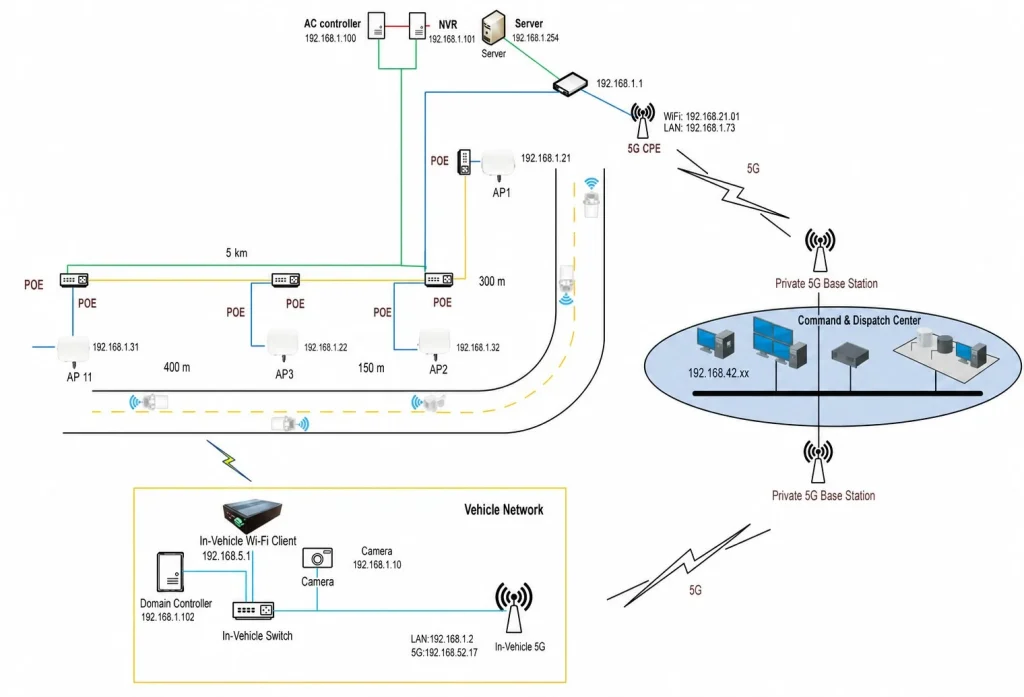
The mine terrain created local coverage difficulties. Therefore, the team deployed industrial Wi-Fi 6 roadside access points where the private 5G signal was weak. The mine truck wireless network then provided a supplementary path. Together, private 5G and Wi-Fi 6 formed the dual-link communications architecture.
The team installed multiple industrial Wi-Fi 6 base stations along key route sections. These sections extended from the dumping area to the loading area. Each vehicle used an industrial Wi-Fi 6 roaming client. Meanwhile, the vehicle gateway monitored RSSI and link latency. It selected the better available path and switched between Wi-Fi and private 5G.
The switching process required no manual intervention. As a result, it reduced the risk of a network interruption. It also kept vehicle-control data and HD video available during continuous autonomous operation.
Network Architecture
The test system used roadside access points and in-vehicle industrial Wi-Fi 6 clients. It also included an AC wireless controller and 5G CPE backhaul equipment. Together, these components connected the haul route with the mine dispatch centre.
The Wi-Fi section used a star topology with roadside access points and in-vehicle clients. Each vehicle connected to access points along the route. Next, the roadside network aggregated the traffic. The 5G CPE equipment returned that traffic to the mine dispatch centre. The in-vehicle gateway supported both private 5G and Wi-Fi 6. It changed paths according to real-time network quality and improved overall reliability.
Product Capabilities Used in the Test
AC Wireless Controller
- Multi-WAN load balancing, link backup and bandwidth aggregation
- PPPoE, DHCP, static IP and PPTP access methods
- Layer 2 and Layer 3 deployment
- Centralized management for up to 50 access points
- DHCP configuration, MAC binding, behavior management, traffic control and firewall functions
Industrial Wi-Fi 6 Access Point
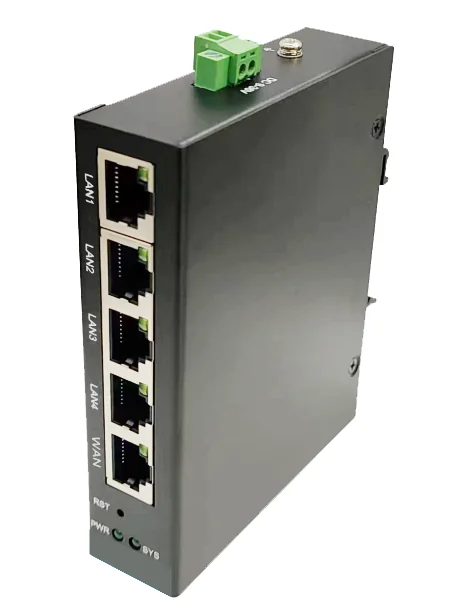
- Wi-Fi 6 (802.11ax) with a wireless rate up to 3000 Mbps
- Gigabit PoE Ethernet, Gigabit optical and DC power interfaces
- Internal- or external-antenna configurations
- Industrial fanless design
- Mesh networking and Chinese SSID support
- IP67 protection for dusty, hot, rainy and snowy environments
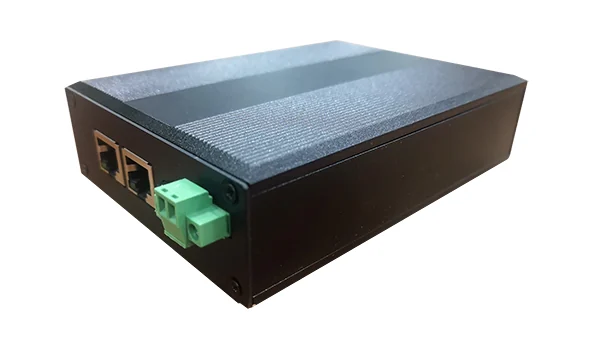
In-Vehicle Industrial Wi-Fi Client
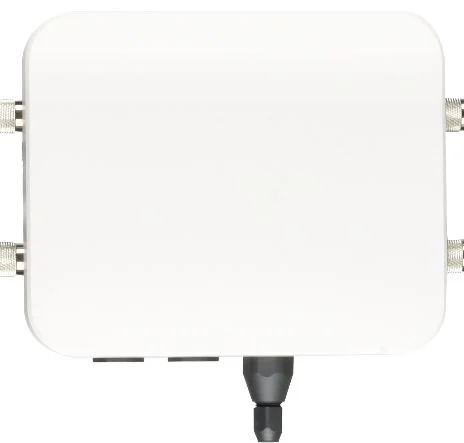
- Wi-Fi 6 (802.11ax) with a wireless rate up to 3000 Mbps
- Two Gigabit Ethernet ports
- RS232/RS485 industrial interfaces
- 12/24 V DC wide-voltage power input
- External SMA RF connectors for flexible in-vehicle antenna selection
- Industrial design for long-duration continuous vehicle operation
Mine Truck Wireless Network Test Results
The on-site measurements reported stable performance across the mine truck wireless network test area.
- Full-area test: ping latency remained between 3 and 7 ms, with no evident packet loss during continuous operation. Iperf3 throughput remained between 220 and 270 Mbps, supporting multiple HD video streams.
- Long-distance test: the communication distance exceeded 450 m. RSSI was approximately −75 dBm, while ping latency remained below 5 ms. Measured bandwidth was approximately 100 Mbps. The link continued to carry HD video and vehicle-control traffic.
- End-to-end communication: the team tested the AC controller directly with the in-vehicle terminal. End-to-end latency remained below 4 ms, and data transmission was stable.
Conclusion
The test verified the application value of the mine truck wireless network in the documented open-pit project. Across curved road sections, long-distance links, HD video backhaul and real-time vehicle control, industrial Wi-Fi 6 supplemented gaps in the private 5G coverage. The reported measurements apply to this test site and should not be treated as universal performance guarantees.
Sailsky will continue developing industrial wireless communication solutions for smarter and more digital mine operations.