
Smart Port Wireless Network for Inspection Robots at Caofeidian Port
2026.08.24 / By Sailsky / Tags:Industrial Wi-Fi 6Industrial Wireless NetworkInspection RobotSmart Port
Caofeidian Port uses a smart port wireless network in its coal conveyor area. The network connects moving inspection robots to the control centre. It also carries live video and equipment data.
Sailsky built the network with industrial Wi-Fi 6 access points, fibre backhaul and a roaming CPE. As a result, the robot could move between access points while it stayed online. The Chinese project report also states a handover time below 50 ms.
Why the Conveyor Route Needed Wireless Coverage
Coal conveyors operate for long hours and cover long routes. Therefore, port teams need frequent checks along the full line. Manual checks take time and can expose workers to moving equipment.
Inspection robots offer another way to monitor the route. They can check rollers, drums, belts and other key equipment. However, they still need a stable link to the control centre.
The robot also sends live HD video and operating data. Consequently, the wireless network must support steady coverage, fast handover and reliable backhaul.
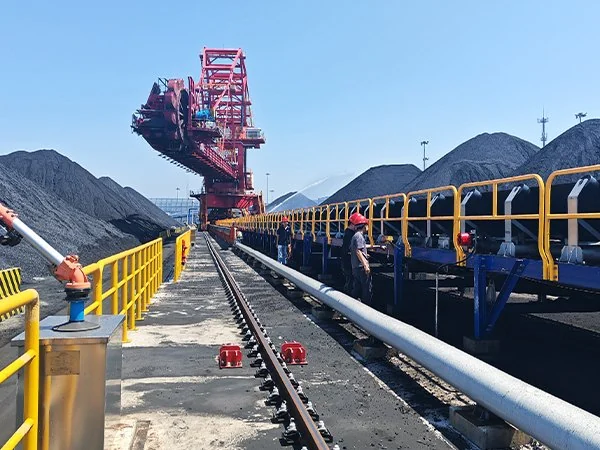
Wireless Challenges Along the Port Conveyor
The conveyor route creates a long and narrow coverage area. In addition, steel frames, cable trays, pipes and machines can reflect radio signals. These structures can also weaken the signal in some sections.
The robot moves while it records video. Therefore, it must change access points without a long break. A slow handover could interrupt the video stream or delay operating data.
The network also needs capacity for continuous HD video. At the same time, it must carry robot and equipment data. For this reason, the design must consider coverage, roaming and backhaul together.
How Sailsky Designed the Smart Port Inspection Robot Wireless Network
Sailsky installed BL3000HW-SFP industrial Wi-Fi 6 access points along the conveyor route. Directional antennas focused coverage along the travel path. Meanwhile, fibre links connected the access points to the port backbone.
This design joined mobile wireless access with wired backhaul. Therefore, the robot could send video and equipment information to the monitoring centre. The fibre network also reduced the load on the wireless access layer.
The robot used a BL5000Air roaming CPE. It linked the onboard cameras and control equipment to the port network. As the robot moved, the CPE changed access points along the route.
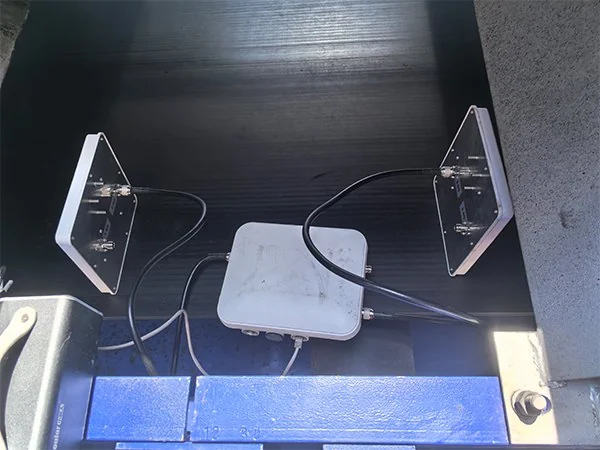
Industrial Wi-Fi 6 and Fast Roaming
The BL3000HW-SFP supports a stated wireless rate of up to 3000 Mbps. This capacity supports HD video and equipment data. For wider industry context, UNCTAD explains the digitalization of port operations and the role of shared operational data. However, final throughput still depends on the site design and radio conditions.
The source report states that the robot completed handover in less than 50 ms. Therefore, the link could remain available while the robot crossed access point coverage areas. This fast roaming supported continuous video along the inspection route.
Directional antennas also helped the linear route design. They sent more radio energy toward the conveyor path. As a result, the network used its coverage more efficiently inside the metal-rich area.
Smart Port Wireless Network Results
After deployment, the source reports continuous wireless coverage along the conveyor route. The inspection robot could upload video and inspection data while it moved. Operators could also view equipment status from the monitoring centre.
The system supported autonomous inspection in the operating area. In addition, it reduced the need for frequent manual checks along the conveyor. The report also records stable network operation and sub-50 ms roaming.
These results apply to the documented Caofeidian Port project. Other ports need their own site survey, radio plan and acceptance tests. Therefore, teams should not copy access point spacing without field checks.
Planning a Similar Smart Port Wireless Project
Sailsky industrial wireless solutions can support other long and linear routes. However, each project needs a separate design. The team should first map the robot path, metal structures, cable routes and available fibre points.
Next, engineers should confirm video traffic, control data and roaming targets. They should also test signal overlap at every handover point. Finally, commissioning should measure coverage, packet loss, latency and video continuity.
A clear acceptance plan helps the operator and integrator use the same criteria. It also links the wireless design to the real inspection task. In this way, the network supports the robot instead of becoming a separate technology project.